I'm going to say something most pressure washing companies won't: your patio is probably much dirtier than you think it is.
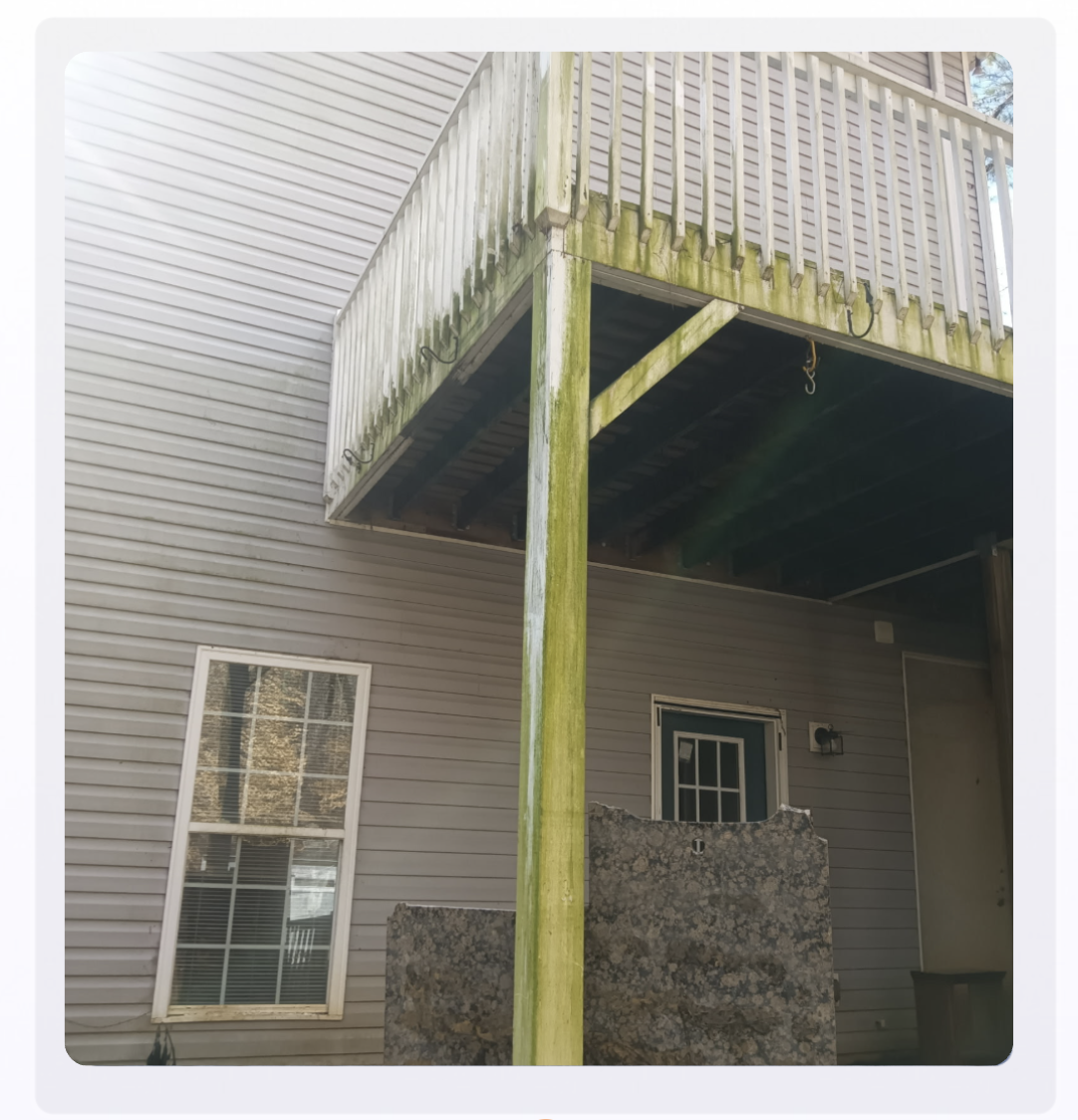
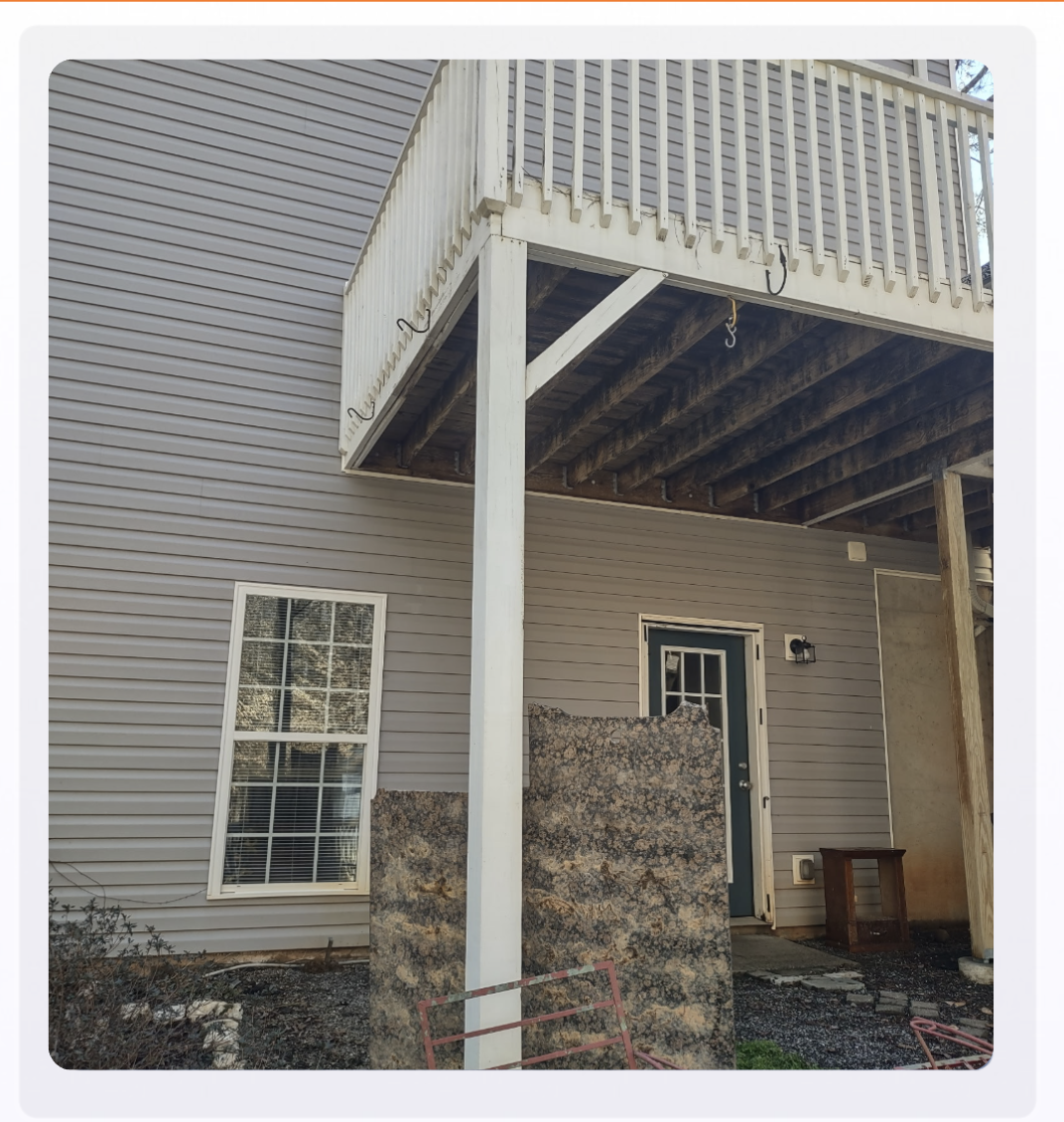
Here's why. You look at your patio every day. The mold, the red clay film, the black streaks from the drip line — they accumulated gradually over months and years. You've adjusted to it. Your brain normalized it. So when you look out the back door, you think "that's just what concrete looks like." It's not. Your patio is dark, stained, and slippery because it's covered in biological growth and mineral deposits that have been accumulating since the last time it was properly cleaned — which, for most Canton homeowners, was never.
I know this because every time I finish a patio in Cherokee County, the homeowner says some version of the same thing: "I had no idea it was that light underneath." The difference between your patio's current state and its actual color is usually startling. It's like pulling up a dirty rug and seeing the original hardwood floor beneath it.
So let's talk about what patio pressure washing actually involves in Canton, Georgia — what it costs, how the process works for different surface types, what's growing on your concrete right now, and why an annual cleaning saves you from a much more expensive problem down the road.
What Patio Pressure Washing Costs in Canton, GA
Real numbers from real jobs. No "call for pricing" runaround — here's what you should expect to pay for professional patio cleaning in Canton and Cherokee County.
Your exact price depends on square footage, surface type, stain severity, and accessibility. But here's the deal: the price I text you is the price you pay. Not a range. Not an estimate that balloons once I arrive. A specific number. If the job turns out to be harder than I estimated, that's on me — not you.
Want your exact patio price? Text your Canton address to (470) 664-4824 and tell me what surfaces you want cleaned. I'll send back a specific number — not a range — typically within minutes. That's it. No sales pitch.
What's Actually Growing on Your Patio Right Now
Canton sits in a unique intersection of conditions that make outdoor surfaces absolutely thrive with biological growth. Here's what's happening on your patio while you're not looking:
Black mold (Gloeocapsa magma). Those dark streaks and patches? That's a cyanobacteria that feeds on moisture and the minerals in your concrete. It's not just ugly — it's a living colony that's actively spreading. Every time it rains, it grows. Georgia's humidity keeps it fed between rains. Left unchecked, it darkens your entire patio surface to a uniform black-green that makes the concrete look decades older than it is.
Green algae. The slippery green film that appears in shaded areas, under furniture, and anywhere moisture lingers. This is what makes your patio genuinely dangerous when wet. Barefoot kids running to the pool? Someone carrying a plate of food from the grill? A wet patio with algae growth is a slip-and-fall waiting to happen. And in Canton's summer thunderstorm season, your patio is wet constantly.
Red clay deposits. Georgia's famous red clay (iron oxide) splashes onto patios from downspout runoff, shoe traffic, pet paws, and rainwater bouncing off mulch beds. It bonds to concrete at a molecular level. Fresh red clay washes off with a garden hose. Red clay that's been baked by two summers of Georgia sun? That requires professional-grade chemistry and commercial equipment. Most Canton homeowners wait too long, and by then they assume the orange-brown discoloration is permanent. It's not — but it takes real treatment to remove.
Lichen and moss. In shaded patios — especially under tree canopy — lichen and moss embed themselves into concrete pores and paver joints. These aren't just surface stains. They grow roots into the material itself, which means a garden hose or consumer pressure washer won't touch them. They need to be chemically killed before they can be removed, or they grow back within weeks.
How Professional Patio Pressure Washing Actually Works
This isn't just pointing a hose at the ground. Professional patio cleaning in Canton is a multi-step process that produces dramatically different results than anything you can rent from Home Depot. Here's what happens when I clean your patio:
Pre-Treatment Application
Before any pressure touches the surface, I apply professional-grade cleaning solution to the entire patio. This isn't bleach from Walmart — it's a commercial surfactant blend that penetrates biological growth and breaks the bond between stains and concrete. For red clay, I use a targeted iron oxide remover. The pre-treatment dwells for 5–10 minutes, doing the heavy chemical lifting so the pressure washer doesn't have to.
Commercial Surface Cleaning
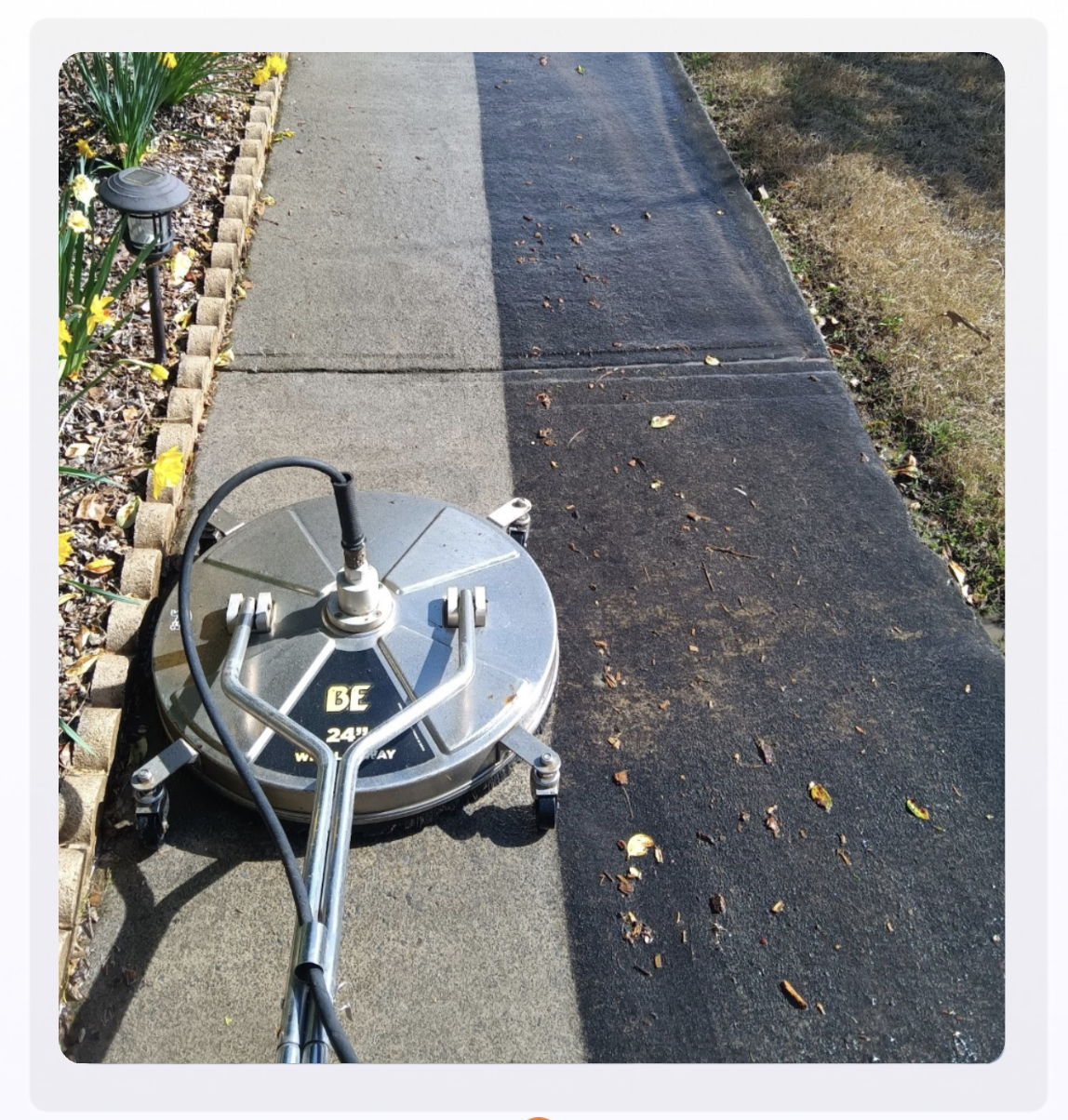
This is the step that separates professional results from DIY disasters. I use a commercial surface cleaner — a 20"+ spinning deck that maintains uniform pressure and distance across the entire surface. No tiger stripes. No uneven overlap marks. No wand gouges. The surface cleaner covers your patio in methodical, overlapping passes that produce a completely even result from edge to edge.
Edge & Detail Work
The surface cleaner handles the flat areas. Edges, expansion joints, steps, and transitions require hand-wand detail work with a controlled fan tip. This is where experience matters — incorrect technique here leaves visible marks. I clean every edge, corner, and step riser so the entire patio looks uniformly restored, not just the middle.
Post-Treatment Rinse
After cleaning, I apply a diluted post-treatment that serves two purposes: it neutralizes any remaining organic growth at the root level (preventing rapid regrowth) and it rinses all debris away from the patio, off adjacent surfaces, and into lawn areas where it biodegrades harmlessly. Your patio is left clean, your plants are unharmed, and the results last.
The entire process takes 45 minutes to 2 hours depending on patio size and condition. Most standard Canton patios are finished in about an hour. You can be back to using your outdoor space the same day.
Every Patio Surface Requires a Different Approach
This is where budget operators get homeowners in trouble. Not every patio material can handle the same pressure, same chemistry, or same technique. Here's how I adapt the process for each surface type common in Canton homes:
Poured Concrete
The most common and most forgiving patio material. Handles full commercial pressure with a surface cleaner. Pre-treat for mold and clay, then clean at 3,000–3,500 PSI with a uniform spinning deck. Results are dramatic and immediate.
Concrete Pavers
Requires reduced pressure and careful nozzle selection to avoid dislodging polymeric sand from joints. I use wider fan tips at lower PSI to clean the paver face without blasting joint material. If joints are already compromised, I'll let you know before starting.
Stamped Concrete
Decorative color and texture require lower PSI and wider spray patterns. Too much pressure strips the integral color and erodes the stamped texture. I use soft-wash chemistry to do most of the cleaning work, then a gentle rinse pass — preserving your pattern and color while eliminating biological growth.
Natural Stone (Flagstone, Travertine, Bluestone)
Natural stone is porous and can be etched by incorrect chemicals or excessive pressure. I adjust both chemistry (pH-neutral cleaners) and pressure (typically 1,500–2,000 PSI) to clean without damaging the stone's natural surface texture or coloration.
This is why "I'll just rent a pressure washer" doesn't work for most patios. A rental machine gives you one pressure setting and a hand wand. That's it. No surface cleaner, no pre-treatment chemistry, no ability to adjust PSI for different materials, and no experience knowing when you're about to damage something. The result is tiger stripes on concrete, destroyed paver joints, stripped stamped color, and etched stone — all of which cost more to fix than the professional cleaning would have cost in the first place.
What Would Your Patio Look Like Clean?
Text your address. Honest price back fast. Watch the transformation happen.
The Real Cost of Not Cleaning Your Patio
"It's just cosmetic" is what most homeowners tell themselves. It's not. Here's what happens when a Canton patio goes uncleaned for years:
Biological growth degrades the surface. Mold and algae don't just sit on top of concrete — they produce acids as metabolic byproducts that slowly etch and erode the surface. Over years of unchecked growth, this weakens the top layer of concrete, creating pitting and surface failure that can't be reversed with cleaning alone. At that point, you're looking at resurfacing or replacement.
Red clay becomes permanent. Fresh red clay rinses off. Red clay that's been repeatedly wet, baked by Georgia sun, wet again, and baked again over multiple seasons bonds to concrete at a molecular level. After enough cycles, even professional treatment can only achieve partial removal. Annual cleaning prevents this entirely — the clay never gets a chance to set.
Paver joints fail. Organic growth between pavers pushes polymeric sand out of joints, allowing water infiltration underneath. This leads to settling, shifting, and trip hazards. Replacing polymeric sand professionally costs $300–$600+ depending on patio size. Regular cleaning keeps joints clear and intact.
Slip hazards create liability. A wet patio with algae growth is genuinely dangerous. If a guest slips and falls at your home, your homeowner's insurance covers it — once. Multiple claims or a serious injury create premium increases or policy non-renewal. A $200 annual cleaning eliminates the hazard entirely.
Removes all growth, prevents permanent staining, maintains safety. Every 12–18 months.
What a neglected, surface-damaged patio costs to tear out and re-pour in Canton.
The math is simple. A $150–$250 annual cleaning maintains a surface that costs $3,000–$8,000 to replace. That's a 20–40x return on investment. There's no home maintenance item with better ROI math than pressure washing.
Why Canton Patios Get Dirtier, Faster
If you moved here from a drier climate, you've probably noticed that outdoor surfaces in Georgia deteriorate faster than anywhere you've lived before. It's not your imagination. Canton's specific conditions create a perfect storm for patio contamination:
- Humidity stays above 70% for six months straight. Mold and algae need moisture to grow. In drier climates, surfaces dry fully between rains, which kills growth before it establishes. In Canton, surfaces never fully dry from May through October. The growth never stops.
- Tree canopy is dense and close. Cherokee County's mature hardwoods and pines provide shade — which keeps surfaces damp longer — and drop organic debris that feeds biological growth. Shaded patios under tree canopy grow mold three to four times faster than sun-exposed surfaces.
- Red clay is everywhere. Georgia's iron-rich soil stains everything it touches. Rain splashes it from beds. Shoes track it. Downspouts deposit it. It's a constant source of discoloration that requires chemical treatment to remove.
- Afternoon thunderstorms are relentless. Canton averages 50+ inches of rain per year. That's constant moisture replenishment for surface growth, plus the kinetic splash that drives clay and debris onto patios from surrounding areas.
- Mild winters don't kill growth. Unlike northern climates where hard freezes kill mold annually, Canton's mild winters allow biological growth to remain dormant rather than die. It resumes the moment temperatures rise in spring — which is why patios seem to get dramatically worse between March and May.
All of this means Canton patios need cleaning more frequently than homeowners expect. Every 12–18 months is the sweet spot — frequent enough to prevent permanent staining and surface degradation, infrequent enough to be cost-effective.
When to Schedule Patio Pressure Washing in Canton
You can have your patio cleaned any time of year. The cleaning chemistry works in any temperature above freezing. But timing affects both scheduling availability and strategic value:
Spring (March–May) is peak demand season. Everyone wants their outdoor spaces ready for summer entertaining. This is the most popular time to book, which means scheduling can be tighter. If you want spring cleaning, text early — February or early March — to lock in your spot.
Early summer (June) is ideal timing if you're hosting. Get the patio cleaned before graduation parties, Fourth of July, or regular summer entertaining. You'll enjoy a clean surface all summer and into fall.
Fall (September–October) catches the worst of summer's growth before it bakes in over winter. Cleaning in fall prevents six months of dormant growth from cementing itself to your surface during the cooler months.
Winter (December–February) is the lightest season for demand, which means fastest scheduling. The cleaning is equally effective — mold is still there, clay is still there, the chemistry works fine in cool weather. And you'll be ahead of everyone scrambling to book in spring.
Patio Pressure Washing FAQ — Canton, GA